Grow Bags vs Plastic Pots: Which Should You Choose?
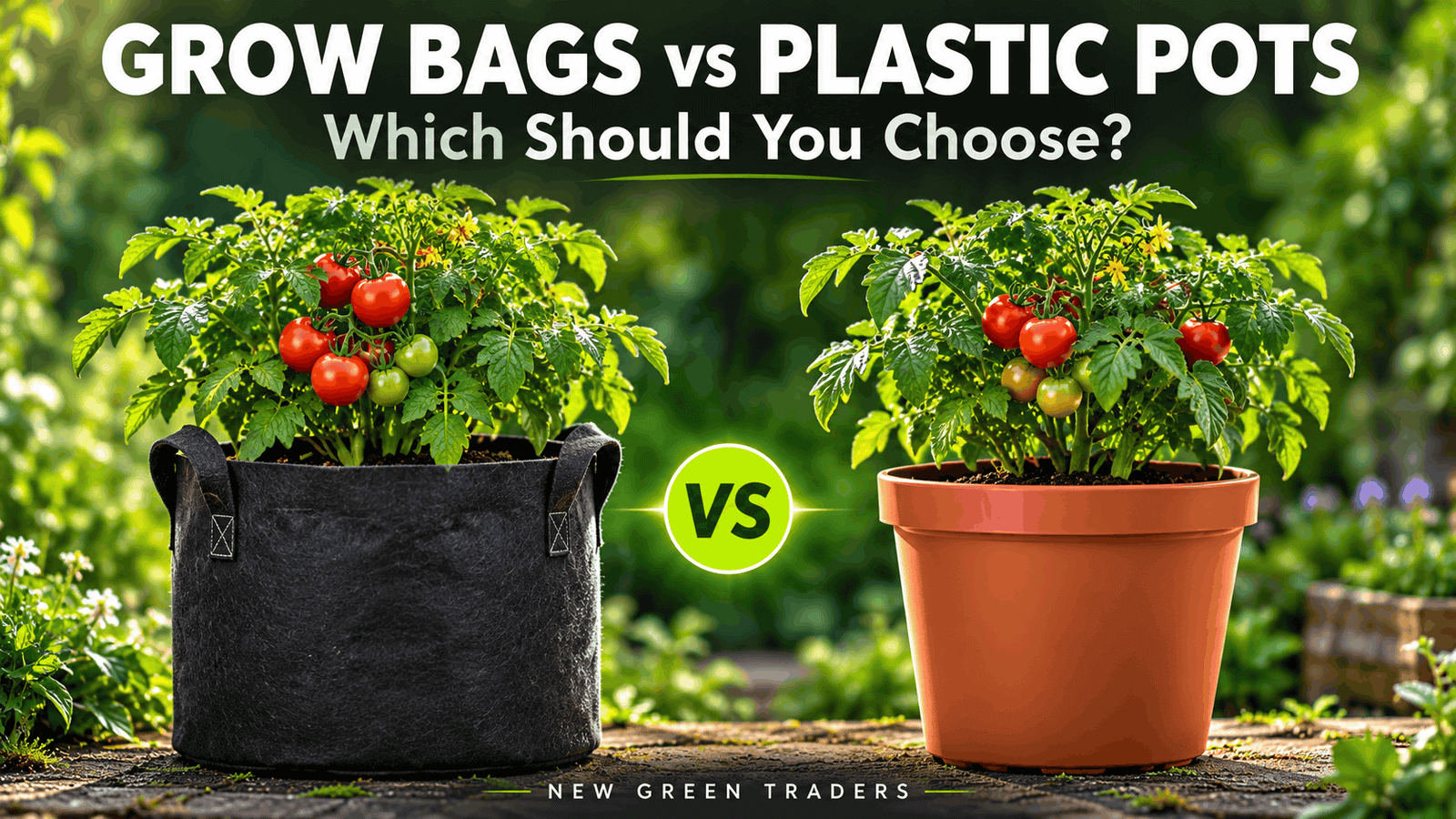
Choosing between grow bags and plastic pots is not simply a question of which container grows bigger plants. Both can support a productive kitchen garden. The better choice depends on your plants, available space, watering routine, and how long you want to use the containers.
A fabric grow bag may suit someone growing seasonal vegetables who can check moisture regularly. A plastic pot may be more convenient for someone who needs longer moisture retention or a rigid container for permanent placement.
For gardeners in Pakistan, the decision also needs to account for hot weather, exposed rooftops, and access to water. This guide compares the practical differences so you can spend your gardening budget where it matters.
Grow Bags vs Plastic Pots: Quick Comparison
| Feature | Fabric grow bags | Standard plastic pots |
|---|---|---|
| Container walls | Porous fabric | Mostly nonporous plastic |
| Moisture retention | Usually dry faster | Usually retain moisture longer |
| Drainage | Water can escape through permeable fabric | Mainly through drainage holes |
| Root behaviour | Can encourage air pruning under suitable conditions | Roots may circle along smooth walls |
| Shape | Flexible | Rigid |
| Empty storage | Can fold flat | Usually stack |
| Moving when filled | Depends on handles, seams, and weight | Depends on construction, grip, and weight |
| Cleaning | Fabric can hold roots and growing mix | Smooth surfaces are generally easier to scrub |
| Useful applications | Seasonal vegetables and flexible layouts | Permanent displays and moisture-conscious setups |
These differences describe typical containers. Construction quality, size, and growing conditions can change how either option performs.
What Are Grow Bags?
Grow bags are flexible containers filled with growing medium. However, the term covers different materials, and those materials do not all behave alike.
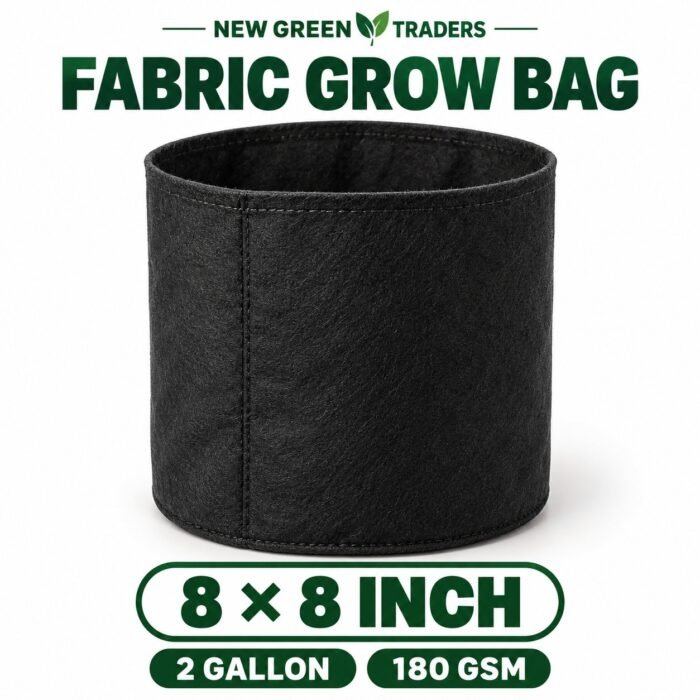
Fabric grow bags are generally made from porous textiles. HDPE grow bags are plastic-based products whose permeability depends on their construction, coating, and drainage openings.
A green HDPE bag should not automatically be described as having the same breathable sides as a porous fabric bag. This comparison mainly discusses fabric grow bags versus rigid plastic pots.
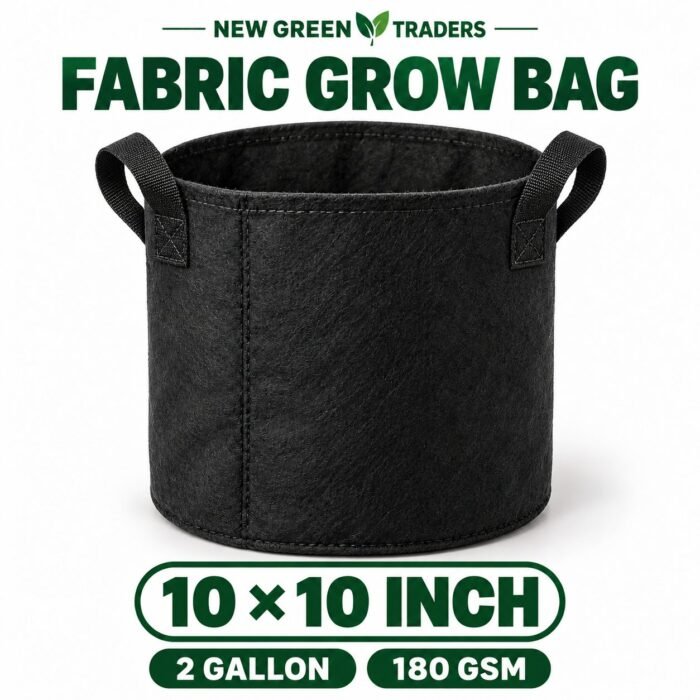
Before buying, check the material, filled dimensions, seams, drainage design, and stated capacity. You can compare the grow bag options available at New Green Traders against the needs of your planned crops.
1. Root Growth: Does Fabric Make a Difference?
When a root reaches a smooth plastic wall, it may change direction and continue growing around the container. Over time, a plant left in an undersized pot can develop a crowded, circling root system.
Porous fabric can behave differently. Where root tips reach a sufficiently dry, air-exposed surface, the tips stop extending. This process, called air pruning, can encourage branching behind the tip. University of New Hampshire Extension describes fibrous root development and reduced circling in porous fabric containers used for woody plants.
However, air pruning is not a guarantee of faster growth or higher yields. Its effectiveness depends on the fabric and surrounding conditions. Roots may grow through a bag resting on moist soil.
Plastic pots can also produce healthy roots when they provide enough space and plants are repotted when necessary.
Choose based on adequate root space first; consider container material second.
2. Drainage: Which Handles Excess Water Better?
Porous grow bags allow water to move through their fabric, while plastic pots mainly release water through openings in the base or sides.
This can make fabric useful where excess moisture is a recurring problem, but a grow bag is not impossible to overwater. Dense growing mix, frequent watering, or standing water beneath the container can still leave roots with insufficient oxygen.
Similarly, a plastic pot with suitable drainage holes and an airy growing mix can drain effectively.
Before planting, check that water has a clear escape route. Avoid leaving either container in a tray of water unless it is part of a properly designed watering system.
Drainage depends on the growing medium and container placement as well as the container walls. Roots need both moisture and air within the growing mix.
3. Watering: Which Is Easier to Maintain?
Fabric containers generally lose moisture faster than plastic containers because their porous walls provide additional opportunities for evaporation. Illinois Extension identifies this as an important difference when managing container watering.
That can be helpful during wet conditions, but it creates extra work during hot, windy weather.
If you regularly miss watering, plastic pots may be more forgiving. If you can check plants consistently or install suitable irrigation, fabric bags become easier to manage.
Avoid following a rule such as “water every morning” without checking moisture. A newly transplanted seedling and a mature fruiting plant can use very different amounts of water.
Check below the surface, water thoroughly when needed, and observe how quickly each container dries. Grouping containers with similar needs can make maintenance simpler.
4. Heat: Which Works Better in Pakistani Summers?
An exposed rooftop in Lahore presents different challenges from a sheltered courtyard. Sunlight, wind, container colour, growing-medium moisture, and surrounding surfaces all influence root-zone conditions.
Fabric can support evaporative cooling, but the accompanying moisture loss means plants still need attention. A black fabric bag should not be assumed to remain cool simply because it is breathable.
Plastic containers also vary. Dark containers can absorb considerable heat, while position and shading can change their exposure. Maryland Extension notes that dark container colours can raise temperatures enough to affect roots.
For either material, monitor exposed containers during hot weather. Consider shading the container sides while maintaining appropriate light for the crop.
Do not expect a change in container material alone to solve heat stress.
5. Plant Growth and Harvest: Is There a Clear Winner?
Neither material guarantees a larger harvest.
A sufficiently large plastic pot with appropriate watering and nutrition can outperform a small fabric bag. A well-managed fabric bag can outperform a poorly drained plastic container.
Before blaming the container, check:
- Whether the plant receives suitable sunlight.
- Whether roots have enough growing space.
- Whether moisture remains reasonably consistent.
- Whether feeding matches the crop.
- Whether pests, disease, or unsuitable temperatures are limiting growth.
Claims such as “grow bags double production” need evidence from a fair comparison. Without controlled conditions, differences may come from container volume, variety, watering, or fertiliser.
Choose the container that helps you maintain suitable conditions consistently.
6. Size: Compare Capacity, Not Appearance
Two containers that look similar in photographs may hold very different amounts of growing mix.
For round containers, check the filled diameter and height. For tapered plastic pots, remember that the base may be much narrower than the opening.
Also confirm whether a grow bag measurement describes its opened shape or its width when laid flat.
A fair comparison considers usable soil volume, depth, and planting area. A tall, narrow container may provide depth but limited space for multiple plants.
Leave room for watering at the top rather than assuming the entire stated height will contain soil.
Choose for the mature crop. A small seedling does not mean the plant will remain suitable for a small container.
7. Cost: Which Offers Better Value?
There is no universal price winner. A thin nursery pot, a heavy decorative planter, and a reinforced fabric bag serve different purposes and have different costs.
Compare containers of similar usable capacity, then calculate the complete setup:
Container + growing mix + delivery + supports + watering equipment.
A larger container may appear affordable until you calculate the amount of mix needed to fill it.
Consider replacement costs too. A low-priced container that fails early may cost more over several seasons than a better-made alternative.
Avoid judging quality from thickness or GSM alone. For fabric bags, examine stitching and handle attachment. For plastic pots, inspect the rim, base, drainage openings, and resistance to bending or cracking.
8. Durability: How Long Will They Last?
Lifespan depends on material quality, sunlight exposure, handling, and storage.
Fabric bags can develop worn seams, damaged handles, or weakened fabric. Plastic pots can become brittle, crack, or split, particularly as unsuitable materials deteriorate outdoors.
Treat exact lifespan promises cautiously unless they are supported by product-specific information.
Check containers before each planting season. Pay attention to the base because failure there can spill the entire root ball.
For seasonal bags, emptying, cleaning, and drying them before storage helps keep them ready for reuse. Oklahoma State University Extension specifically advises allowing grow bags to dry completely before storing them.
A reusable container only provides long-term value if its construction survives your growing conditions.
9. Moving, Storage, and Appearance
Both options can be lightweight when empty. Once filled, the growing mix and water account for much of the weight.
Handles do not guarantee that a large wet bag can be lifted safely. Check their condition, avoid dragging containers, and position large plants before they become difficult to move.
Fabric bags fold down for storage, making them convenient for seasonal gardens. Plastic pots usually stack, although rigid shapes occupy more space.
For visible entrances or indoor displays, plastic pots offer more rigid shapes and decorative finishes. Fabric bags generally have a more practical appearance and may develop surface marks.
These are usability preferences rather than measures of plant health.
10. Reuse and Environmental Considerations
Fabric does not automatically mean natural or biodegradable. Many grow bags contain synthetic materials, while plastic pots also vary in composition and recyclability.
An environmental comparison needs information about manufacturing, lifespan, transport, and disposal. Appearance alone cannot establish which product has the lower impact.
A practical approach is to use existing suitable containers, buy durable replacements when necessary, and reuse them carefully.
For edible crops, choose containers intended for appropriate gardening use or suitable food-grade repurposing. Avoid containers previously used for hazardous substances. Maryland Extension recommends food-grade materials for repurposed plastic growing containers.
Do not assume every household plastic container is suitable simply because drainage holes can be added.
Which Should You Choose for Your Garden?
For a seasonal kitchen garden
Fabric bags are worth considering if you want containers that can be emptied and stored between crops. They are particularly convenient when you regularly rearrange the garden while containers are empty.
For a gardener with limited watering time
Plastic pots may be more manageable because they generally retain moisture longer. However, small pots with mature plants can still dry quickly. Automatic watering may matter more than the material.
For an exposed rooftop
Choose adequate capacity, reliable irrigation, stable supports, and appropriate placement. Consider total wet weight and the roof’s drainage before expanding. Neither container type removes these planning requirements.
For permanent ornamental displays
A sturdy plastic pot may suit the desired appearance and provide convenient structural support. Choose sufficient root space and plan for future repotting.
For beginners who are unsure
Start with a small trial. Grow the same variety in containers of similar capacity, using the same mix and location. Record watering needs and plant performance rather than buying your entire setup based on a general claim.
Frequently Asked Questions
Are grow bags better for tomatoes?
Fabric bags can work well for tomatoes, but plastic pots can too. Container capacity, variety, support, moisture, and feeding are essential. Choose a suitable size for the mature plant rather than assuming fabric compensates for limited space.
Can I use ordinary garden soil in either container?
Garden soil can become dense in containers, depending on its composition. Use a growing mix that balances drainage, moisture retention, and aeration. Changing from plastic to fabric does not automatically correct an unsuitable mix.
Can grow bags sit directly on the ground?
They can, but roots may grow through into the soil, making later movement difficult. On hard surfaces, ensure drainage remains clear and water does not collect beneath them. Choose placement according to whether you intend to move the plants.
Do plastic pots cause root rot?
Plastic itself does not cause root rot. Persistently unsuitable moisture conditions, poor aeration, and disease organisms can contribute to root problems. Review drainage, growing mix, and watering before replacing an otherwise suitable pot.
Can I use both in the same garden?
Yes. Use fabric bags where seasonal flexibility suits you and plastic pots where moisture retention or a rigid shape is useful. Manage watering individually rather than giving every container the same amount.
Make Your Choice Around Your Routine
Choose fabric grow bags when you value foldable storage, flexible seasonal planting, and porous container walls—and can manage their watering needs.
Choose plastic pots when longer moisture retention, rigid construction, or decorative appearance better suits your routine.
Before ordering, list your crops, measure the available space, and calculate the growing mix required. Then compare available grow bag sizes and materials with suitable plastic alternatives. The best container is the one that gives your plants enough room and allows you to care for them reliably.